OLED vs Mini LED: What's the Real Difference?
The two technologies produce light in completely different ways — and that one detail explains almost everything else.
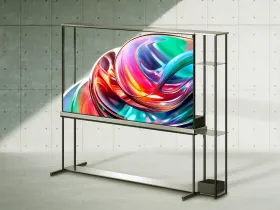
Two radically different ways of making a picture
An OLED panel is "emissive": every pixel generates its own light and can switch off completely on its own. A Mini LED panel is still a regular LCD panel, but backlit by a very large number of small LEDs grouped into local dimming zones (sometimes several thousand of them). That manufacturing difference, technical as it sounds, explains almost every behavioral gap between the two technologies in real use.
OLED's perfect black vs Mini LED's brightness
Because every OLED pixel can turn off entirely, black is truly black, with no light leaking around a bright object on a dark background — a clear advantage for night scenes or credits with white text on a black screen. Mini LED, on the other hand, can't switch off pixel by pixel: it dims entire backlight zones instead, which is very effective but less precise. In exchange, a Mini LED panel can generally reach much higher peak brightness than an OLED panel, which makes it more comfortable in a bright room or for very high-contrast HDR content.
Blooming and burn-in: the tradeoffs you don't see in the showroom
Mini LED's main flaw is "blooming" (or haloing): a faint glow around a very bright object on a very dark background, visible whenever that object doesn't line up neatly with a dimming zone's edges. More local dimming zones reduce this flaw, but it's rarely completely invisible. OLED doesn't have this haloing problem, but it remains theoretically exposed to permanent image marking (burn-in) after years of the same static element (a channel logo, a navigation bar) being displayed repeatedly at very high brightness — a risk that's become marginal for typical use thanks to modern anti-burn-in technology, but still real for a very specific use case like a professional monitor continuously showing the same interface.
Which screen suits which room
For a dark, dedicated movie room, OLED clearly has the edge thanks to its perfect blacks and lack of haloing. For a bright living room with plenty of daylight, a Mini LED with high peak brightness generally holds up better against reflections and stays visible even in broad daylight. So the right choice depends less on an absolute hierarchy between the two technologies and more on the actual room the TV will live in.
Compare OLED and Mini LED models on our best TVs by display quality ranking.