Handheld High Resolution mode on the Panasonic Lumix S1R II
Merging multiple images to reach up to 177 megapixels, without a tripod thanks to the built-in stabilizer.
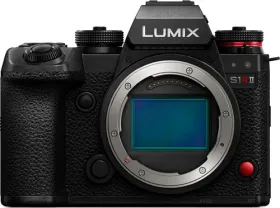
Merging multiple images for extra detail
High Resolution mode merges several images captured in succession to produce a far more detailed final image — a feature built for stationary subjects: architecture, landscapes, still life, artwork reproduction. Turning on the Handheld High-Res option lets you use it without a tripod, with image stabilization taking over to compensate for micro-movements between shots. Without that option, a tripod is still recommended to limit camera shake.
Resolution climbing up to 177 megapixels
Once merging is complete, the final image size depends on the chosen aspect ratio: at 3:2, the XL resolution reaches 16288 x 10848 pixels, roughly 176.5 megapixels. Other ratios offer comparable sizes: 4:3 up to 157 megapixels, 16:9 up to 149.5 megapixels, 1:1 up to 117.5 megapixels — each with an LL option at roughly half the resolution. RAW files, meanwhile, are always recorded in the 3:2 format.
Useful settings to know
The Simultaneous Record option keeps a normal, unmerged shot alongside the merged image. An adjustable shutter delay, from 1/8 second to 30 seconds, limits vibration at the moment of release. Finally, motion blur processing offers two modes: the first prioritizes the high resolution effect at the cost of an afterimage on moving subjects, the second reduces that afterimage without achieving the same level of detail in the corrected area — this second mode is, in fact, automatically enforced as soon as the handheld option is turned on.
This guide is about
Panasonic Lumix S1R II Mirrorless Camera