Best Cheap TVs in 2026: Choosing Well Without Breaking the Bank
You don't need a premium OLED to enjoy your shows and movies. Here are the criteria that really matter on an entry-level TV, and the ones you can compromise on.
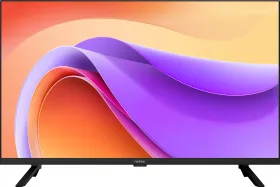
📺 Best Cheap TVs in 2026
All premium display technologies (OLED, Mini LED, Micro LED) only make sense for demanding home-cinema use. For classic everyday use — news, shows, streaming — a well-chosen entry-level TV offers a largely satisfying experience, provided you don't get the criteria wrong at this price point.
Resolution: Full HD or 4K, which to choose?
On small formats (32 inches and under), the difference between Full HD and 4K is barely noticeable at normal viewing distance, since the human eye can no longer distinguish individual pixels at this size. On larger formats (43 inches and above), 4K becomes much more noticeable and generally justifies the slight extra cost.
The panel: classic LED, the entry-level standard
Almost all entry-level TVs use a classic LED panel, without the advanced local-contrast technologies of premium models. The result remains perfectly fine for everyday use, with blacks less deep than an OLED but more than sufficient outside of demanding home-cinema use.
Smart TV: check the interface's smoothness, not just its presence
Nearly every current TV now includes a smart TV system with access to streaming apps. On entry-level models, the real difference lies in menu navigation smoothness, often slower than on premium models — a criterion worth checking through user reviews rather than the spec sheet alone.
Refresh rate: sufficient for most uses
Most entry-level TVs offer a standard refresh rate, more than sufficient for movies and shows. This criterion becomes important mainly for gaming or fast-moving sports — if that's not your main use, it's not a point to prioritize on a tight budget.
Built-in sound: a frequent weak point at this price level
The built-in speakers of thin, affordable TVs often remain the weakest point of the overall experience. If sound quality matters to you, budget for a basic soundbar rather than investing more in the TV itself for a marginal sound gain.
Comparison table: which criterion to prioritize based on your budget?
| Criterion | Priority on a tight budget | Can be sacrificed |
|---|---|---|
| 4K resolution (large format) | Yes | Not if 32" or below |
| Smart TV interface smoothness | Yes | — |
| Built-in sound quality | No | Yes, add a soundbar |
| High refresh rate | No (outside gaming) | Yes |
| OLED-type contrast | No | Yes, outside demanding home cinema |
Mistakes to avoid
Buying too large for the room. On an entry-level TV, an oversized format relative to viewing distance highlights the panel's limitations more than a better-proportioned format.
Neglecting connectivity. Some very budget models limit the number of available HDMI ports — a real problem if you plan to connect several devices (console, set-top box, soundbar).
Ignoring reviews on software smoothness. A good panel paired with a slow, glitchy interface ruins the overall experience — a flaw more common on entry-level models than picture contrast itself.
Conclusion
A well-chosen cheap TV largely covers the needs of classic everyday use. The key is to prioritize a resolution suited to the screen size and a smooth interface, rather than aiming for premium features (OLED contrast, high refresh rate) that only bring real benefit for specific uses — intensive gaming or demanding home cinema — that most households don't have.