Air Conditioner Buying Guide 2026: What Power and Model to Choose?
Getting the size of an air conditioner wrong means either overpaying at purchase or still suffering the heat despite owning one. Here's how to calculate the right power for your room and pick the right model.
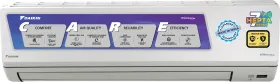
❄️ Air Conditioner Buying Guide for 2026
Buying an air conditioner seems simple on the surface, but sizing it wrong is one of the most common disappointments: a unit that's too small struggles to cool the room in a heatwave, while an oversized model wastes energy and can create uncomfortable, poorly regulated humidity.
This guide explains how to choose the right power and the criteria that really set two air conditioners apart.
Understanding power in BTU or tons
An air conditioner's power is usually expressed in BTU (British Thermal Units) or in tons for more powerful models. It's the single most important criterion, and yet the one buyers most often get wrong.
How to estimate the power you need
Room size is the starting point, but it isn't enough on its own. Several factors increase the real power requirement:
- How much sun the room gets (a south-facing room needs more power than a shaded one).
- Ceiling height, which increases the volume of air to be treated.
- The number of electronic devices and people regularly in the room, which generate extra heat.
- The quality of the home's insulation.
If in doubt between two power levels, it's generally better to go slightly above rather than below: an oversized unit uses a bit more at full load, but an undersized one will run constantly at full power without ever reaching real comfort.
Inverter or not: a difference that shows up on the bill
Inverter technology lets the compressor continuously adjust its speed instead of constantly stopping and restarting. The practical result: a more stable temperature, less noise, and noticeably lower electricity use over time.
Nearly all recent quality models now use this technology. A non-inverter air conditioner is usually cheaper to buy, but its extra energy cost over several years often ends up exceeding the initial savings.
Energy class: a criterion not to overlook
An air conditioner can potentially run several hours a day throughout the hot season. Its energy class therefore has a direct, cumulative impact on your electricity bill — far more than an occasionally used appliance.
Always favor the highest energy class available within your budget: the price difference at purchase is usually recouped within one or two seasons of intensive use.
Noise level: an often underestimated criterion
For a bedroom in particular, the indoor unit's noise can become a real comfort issue, especially at night in continuous mode. Check the decibel rating of the indoor unit specifically, not just the outdoor one.
Split or portable: which setup to choose?
The split air conditioner
Made up of an indoor unit and an outdoor unit connected by a fixed circuit, this is the most efficient and quietest setup, but it requires professional installation with drilling.
The monobloc or portable air conditioner
Easier to install yourself, with no construction work, but generally less efficient, noisier, and with an exhaust hose that has to run out through a window. A practical solution for temporary use or a rental, but a trade-off you'll have to accept for long-term comfort.
Comparison table: split vs. portable
| Criterion | Split air conditioner | Portable air conditioner |
|---|---|---|
| Installation | Professional required | Self-installed, no work |
| Efficiency | High | Moderate |
| Noise level | Low | Higher |
| Ideal for | Long-term installation | Temporary use, rentals |
Common mistakes to avoid
Choosing solely based on purchase price. Electricity use over several seasons usually outweighs the initial price gap between two models.
Undersizing to save money. An air conditioner too weak for the room will never cool it properly, no matter its mode, and will use more power trying.
Neglecting maintenance. A clogged filter significantly reduces efficiency and increases consumption, regardless of the model originally chosen.
Conclusion
The right air conditioner is above all one whose power is correctly matched to your room and its sun exposure — a criterion that outweighs brand or design. Once that's settled, favor Inverter technology and a good energy class: these are the two factors that will make the biggest difference to your comfort and your bill, season after season.