Essential Smartphone Accessories Buying Guide for 2026
Charger, case, power bank: some accessories genuinely protect your investment, others are unnecessary. Here's how to sort the useful from the superfluous.
🔌 Smartphone Accessories Buying Guide for 2026
After investing several hundred euros in a smartphone, it's tempting to want to protect and optimize everything with accessories. But between aggressive marketing from some brands and genuine practical needs, it's not always easy to know what to prioritize.
This guide sorts out which accessories are genuinely useful and which only offer a marginal benefit.
Fast charger: a real everyday convenience
This is probably the accessory with the best benefit-to-price ratio. A charger matched to your phone's maximum supported power can cut a full charge from over an hour to under thirty minutes.
What to check
- The wattage compatible with your exact model — a more powerful charger than necessary won't charge faster than what the phone can actually accept.
- The connector type (USB-C is now the near-universal standard).
- Manufacturer certification, to avoid non-compliant models that can damage the battery over the long run.
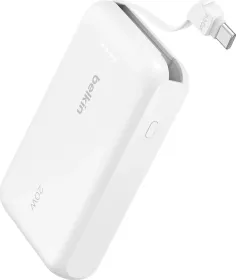
Power bank: useful, but not for everyone
If you're often out all day without access to an outlet, a power bank genuinely changes things. For mainly home or office use, though, it's rarely worth the money.
How to choose the capacity
- 5,000 to 10,000 mAh: enough for one to two full charges, compact and lightweight.
- 20,000 mAh and above: for several days of autonomy or charging multiple devices, at the cost of extra weight.
Protective case: an investment that pays off fast
The cost of a screen repair far exceeds that of any protective case. It's one of the rare accessories where "it could save you a big expense" is almost always true.
Choose a case that genuinely protects the corners of the device — the area most often damaged in a fall — rather than one that's just a thin cosmetic wrap.
Screen protector film or glass: useful but not essential
On recent smartphones, screens already come with reinforced glass resistant to everyday scratches. A protective film is still a good low-cost investment though, especially if you regularly set your phone down on abrasive surfaces (backpack, pocket with keys).
Wireless earbuds: a choice that really depends on how you use them
Unlike the previous accessories, this choice deserves to be guided by your actual use rather than compatibility alone:
- For frequent calls, prioritize microphone noise-cancellation quality over music quality alone.
- For sports, check sweat resistance and how securely they stay in your ears.
- For serious music listening, audio quality and active noise cancellation make a real difference.
Summary table: which accessory to prioritize?
| Accessory | Priority | For whom? |
|---|---|---|
| Suitable fast charger | High | Everyone |
| Protective case | High | Everyone |
| Power bank | Medium | Frequently on the go |
| Screen protector film | Medium | Exposed to scratches |
| Wireless earbuds | Depends on use | Depends on your listening habits |
Pitfalls to avoid
Cheap, uncertified chargers. Poorly regulated power can damage the battery over time — a risk that far outweighs the savings at purchase.
Power banks oversized for your actual use. Too much capacity mostly adds unnecessary weight to your bag, with no real benefit for occasional use.
Generic "all-in-one" accessory packs. Often sold cheap, they usually sacrifice the quality of each individual item — it's better to choose each accessory separately based on your specific needs.
Conclusion
There's no need to give in to the temptation of buying every accessory available at the time of purchase. A good matching charger and a protective case cover the essential needs for the vast majority of users. Other accessories are only worth it if they meet a real, regular need — a single quality accessory used daily beats several gadgets that end up at the bottom of a drawer.